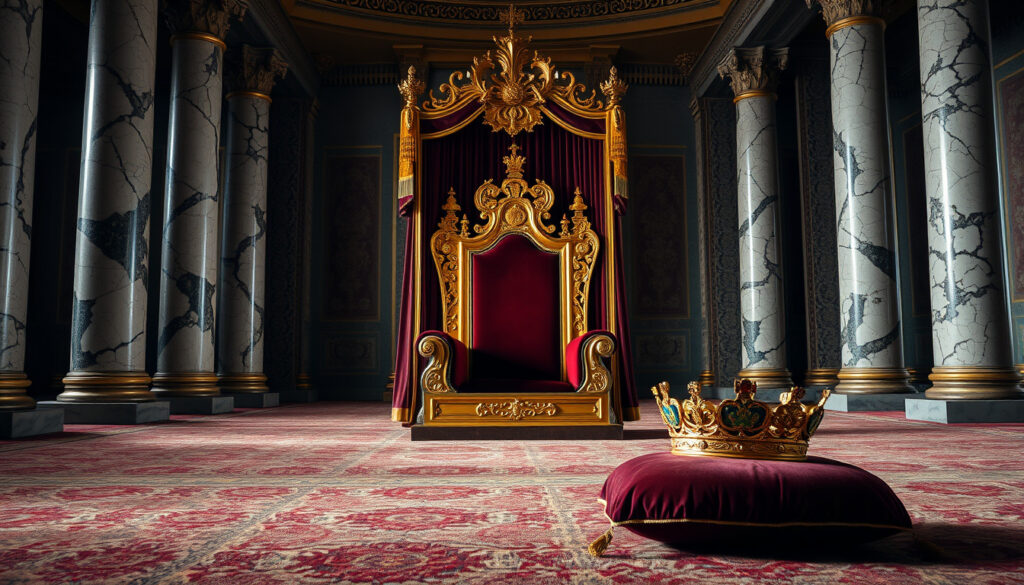
Shah of Iran: Overthrow, Family, and Legacy
Few twentieth-century monarchs inspired as much admiration and resentment as Mohammad Reza Pahlavi, the last Shah of Iran. His ambitious modernization program transformed the country, but his iron-fisted rule and close ties to the West alienated millions. By January 1979, mass protests forced him into exile, and within a month the Pahlavi dynasty had fallen.
Reign of Mohammad Reza Pahlavi: 1941 – 1979 ·
Overthrow date: February 11, 1979 ·
Death of the Shah: July 27, 1980 (Cairo, Egypt) ·
Current head of exiled Pahlavi family: Reza Pahlavi (born 1960)
Quick snapshot
- The Shah was overthrown by the 1979 Iranian Revolution (Encyclopaedia Britannica (leading reference work)).
- He died in Cairo, Egypt, in 1980 (Encyclopaedia Britannica).
- Exact causes of the Shah’s cancer and its treatment are debated.
- The degree of foreign involvement in the revolution is still disputed.
- The Shah fled Iran on January 16, 1979 (Associated Press (major news agency)).
- The monarchy fell on February 11, 1979 (Brookings Institution (respected think tank)).
- The Shah’s son Reza Pahlavi is active in exile politics (NDTV (Indian news outlet)).
- The Pahlavi family advocates for a secular democratic Iran. (NDTV (Indian news outlet))
Six key facts about the last Shah reveal a life defined by modernization, repression, and exile.
| Attribute | Value |
|---|---|
| Full name | Mohammad Reza Pahlavi |
| Born | 26 October 1919, Tehran |
| Died | 27 July 1980, Cairo, Egypt |
| Reign | 16 September 1941 – 11 February 1979 |
| Spouses | Fawzia Fuad, Soraya Esfandiary, Farah Diba |
| Children | Reza, Farahnaz, Ali Reza, Leila |
Why did Iran remove the Shah?
Background of the Iranian Revolution
- The 1979 revolution overthrew Mohammad Reza Pahlavi after 38 years of rule (Encyclopaedia Britannica).
- A broad coalition—from secular leftists to religious conservatives—united against the monarchy (Encyclopaedia Britannica).
- Key causes included political repression, economic inequality, Western influence, and religious opposition led by Ayatollah Khomeini (Encyclopaedia Britannica).
Causes of the overthrow
- The Shah’s secret police, SAVAK, suppressed dissent, fueling resentment (Encyclopaedia Britannica).
- Economic mismanagement and oil wealth disparity angered many Iranians.
- Western cultural influence, especially from the United States, was seen as a threat to Iranian identity (Reuters (international news agency)).
The Shah’s push for modernization created new urban classes and expectations, but his refusal to share power turned those very groups against him.
The implication: the Shah’s own policies of rapid change sowed the seeds for the coalition that would ultimately unseat him.
What was the Shah of Iran known for?
Modernization under the White Revolution
- In 1963, the Shah launched the White Revolution, a series of social and economic reforms (Encyclopaedia Britannica).
- Reforms included land redistribution, women’s suffrage, and industrialization.
Repressive secret police (SAVAK)
- SAVAK was created with help from the CIA and Mossad to monitor dissent (Encyclopaedia Britannica).
- The organization was notorious for torture and executions.
Close alliance with the United States
- The Shah was a key U.S. ally in the Cold War, hosting American military bases and buying advanced weapons.
- This relationship made him a target of nationalist and Islamist opposition (Reuters).
The Shah gave Iran rapid modernization and a strong military, but at the cost of political freedom and national sovereignty.
The pattern: each area of the Shah’s legacy carried an internal contradiction that alienated a segment of Iranian society.
Who defeated the Shah of Iran?
Role of Ayatollah Khomeini
- Ayatollah Ruhollah Khomeini, in exile since 1964, emerged as the leader of the revolutionary coalition (Brookings Institution).
- He returned to Iran on February 1, 1979, after the Shah’s departure (PBS (U.S. public broadcaster)).
Mass protests and strikes
- Throughout 1978, massive protests, strikes, and demonstrations paralyzed the country (Swarthmore College (academic database)).
- Protesters demanded the end of the monarchy and the dissolution of SAVAK.
Military defections
- On February 11, 1979, the armed forces declared neutrality, and the Shah’s government collapsed (Brookings Institution).
- Revolutionary forces took control of government buildings, television, and radio stations.
The catch: the Shah’s army, built with billions in American aid, chose not to defend him when the moment came.
What happened to the Shah of Iran’s wife?
Farah Pahlavi after the revolution
- Farah Diba, the Shah’s third wife, fled Iran with her family in January 1979 (NDTV).
- She lived in Egypt, then the United States, and eventually settled in France.
Exile and later life
- Farah has written a memoir about her time as queen and her life in exile.
- She remains a symbol of the former monarchy for the Iranian diaspora.
Why did Iran hate the Shah?
Political repression and corruption
- Lack of political freedom, censorship, and SAVAK’s brutality created deep resentment (Encyclopaedia Britannica).
- Corruption within the royal court and the Pahlavi Foundation was widely reported.
Westernization and cultural backlash
- The Shah’s pro-Western stance and the influence of foreign powers fueled nationalist and religious resentment (Reuters).
- Traditional and religious groups opposed the Westernization of Iranian society.
Economic inequality and mismanagement
- Despite oil wealth, economic disparities grew, and rural areas lagged behind.
- Inflation and unemployment fueled discontent even among urban workers.
The Shah’s modernization created new opportunities, but also new inequalities and cultural clashes that ultimately eroded his base of support.
The implication: the people the Shah sought to transform—urban workers, educated youth, rural farmers—each had their own grievance, uniting only in opposition to him.
What happened to Jews in Iran after 1979?
Status of the Jewish community
- After the revolution, many Iranian Jews emigrated, but a community remains in Iran.
- The Jewish community has faced restrictions but still has representation in the Iranian parliament (Encyclopaedia Britannica).
Emigration and current population
- Estimates suggest the Jewish population dropped from about 80,000 before the revolution to under 10,000 today.
- Most emigrants settled in the United States, Israel, and Europe.
Timeline of the Shah’s fall
- 1941: Mohammad Reza Pahlavi becomes Shah after his father Reza Shah is forced to abdicate (Encyclopaedia Britannica).
- 1963: Launches the White Revolution, a series of social and economic reforms.
- 1978: Mass protests against the Shah begin (Brookings Institution).
- January 16, 1979: The Shah leaves Iran for exile (Associated Press).
- February 11, 1979: Islamic Revolution succeeds; monarchy officially ends (Brookings Institution).
- July 27, 1980: Death of Mohammad Reza Pahlavi in Cairo (Encyclopaedia Britannica).
Confirmed facts
- The Shah was overthrown by the 1979 Iranian Revolution (Encyclopaedia Britannica).
- The Shah died in Cairo, Egypt, in 1980 (Encyclopaedia Britannica).
- His wife Farah Pahlavi survived and lives in exile (NDTV).
- The Shah’s son Reza Pahlavi is active in exile politics (NDTV).
What’s unclear
- Exact causes of the Shah’s cancer and its treatment are debated.
- The degree of foreign involvement in the revolution is still disputed.
Voices from the revolution
“The Shah must go. He is a puppet of the West, and Iran will never be free until his regime is overthrown.”
— Ayatollah Ruhollah Khomeini, as recorded in historical accounts (Encyclopaedia Britannica)
“The last days were a blur of fear and uncertainty. We knew the monarchy was over, but we never imagined we would never return.”
— Farah Pahlavi, from her memoir (NDTV)
The legacy of the last Shah remains a fault line in Iranian politics. For the Iranian diaspora, the choice is clear: either embrace the Pahlavi family’s vision of a secular democracy, or accept the Islamic Republic’s narrative of a corrupt, Western-dependent monarchy.
en.wikipedia.org, en.wikipedia.org, historydraft.com, mocoshow.com
Frequently asked questions
What was the White Revolution in Iran?
The White Revolution was a series of reforms launched by the Shah in 1963, including land reform, women’s suffrage, and industrialization (Encyclopaedia Britannica).
What is the current role of the Shah’s son Reza Pahlavi?
Reza Pahlavi, born in 1960, is the head of the exiled Pahlavi family and an advocate for a secular democratic Iran. He is active in diaspora politics and media (NDTV).
How many wives did the Shah of Iran have?
Mohammad Reza Pahlavi had three wives: Fawzia Fuad (Egyptian princess), Soraya Esfandiary (Iranian), and Farah Diba (Iranian).
What did the Shah do for women’s rights?
Under the White Revolution, the Shah granted women the right to vote and encouraged higher education and employment for women, though his regime also repressed independent women’s activism.
Where is the Shah of Iran buried?
The Shah is buried in the Al-Rifa’i Mosque in Cairo, Egypt, where he died in exile in 1980 (Encyclopaedia Britannica).
Why did the US support the Shah?
The United States viewed the Shah as a key Cold War ally, providing military and economic support to secure oil interests and counter Soviet influence in the region (Reuters).
What happened to the Shah’s wealth?
The Pahlavi family’s assets, including the Pahlavi Foundation, were seized by the Islamic Republic after the revolution. The family lives in exile with limited resources.
More related posts
 Rodney Dangerfield: Tie, Shake, and ‘No Respect’ Legacy
 How to Transfer Photos to Computer – iPhone Android Camera Guide
 Satoshi Nakamoto: Identity, Bitcoin Wealth & 21M Cap
 Why Juhi Chawla Is the Richest Actress in India
 Edmonton to Calgary Bus: Schedules, Prices & Tips
 Stacey Dash: Biography, Career, Ethnicity, and Politics
 Chef Anne Burrell’s Death: Cause, Husband, and What Chefs Said
 Megan Oldham: Age, Parents, Olympic Gold & X Games Medals