Che Guevara: Biography, Facts, Legacy and Controversy
The face of Che Guevara is one of the most reproduced in history, but the man behind the beret remains deeply polarizing. Born to a middle-class Argentine family, he became a key commander of the Cuban Revolution and later a global symbol of rebellion, his life marked by Irish ancestry, revolutionary career, execution in Bolivia, and enduring arguments.
Full name: Ernesto ‘Che’ Guevara de la Serna · Born: 14 May 1928, Rosario, Argentina · Died: 9 October 1967, La Higuera, Bolivia · Nationality: Argentine · Known for: Cuban Revolution, Marxist guerrilla · Iconic symbol: Alberto Korda’s photograph ‘Guerrillero Heroico’
Quick snapshot
- Executed by Bolivian forces on 9 October 1967 (PBS American Experience (documentary history))
- Key commander in the Cuban Revolution alongside Fidel Castro (Encyclopaedia Britannica (reference work))
- Had Irish ancestry through his father’s family (The Guardian (UK news publication))
- Exact last words (HISTORY (history media outlet) reports multiple versions)
- Whether he directly ordered certain executions in Cuba (The Guardian (UK news publication) discusses controversy)
- His precise role in decision-making during the Cuban Missile Crisis (Encyclopaedia Britannica (reference work))
- The full extent of his involvement in La Cabaña executions (The Guardian (UK news publication))
- Born 14 May 1928 (Encyclopaedia Britannica)
- Met Castro in 1955 (PBS)
- Executed 9 October 1967 (BBC History (public broadcaster))
- Legacy continues to divide opinion; his image remains a rallying symbol for leftist movements (Encyclopaedia Britannica)
- New biographical works and archival releases may clarify disputed events (The Guardian (UK news publication))
Nine biographical facts, laid out side by side, reveal how much of his life is firmly documented and where gaps persist.
| Label | Value |
|---|---|
| Full name | Ernesto ‘Che’ Guevara de la Serna |
| Birth date | 14 May 1928 |
| Death date | 9 October 1967 |
| Place of birth | Rosario, Argentina |
| Place of death | La Higuera, Bolivia |
| Occupation | Physician, revolutionary, guerrilla leader, diplomat |
| Known for | Cuban Revolution, Marxist guerrilla warfare |
| Spouse | Hilda Gadea (m. 1955; div. 1959), Aleida March (m. 1959) |
| Children | Four |
Guevara’s lineage connects him to both European aristocracy (through Spanish and Irish ancestry) and anti-colonial rebellion—a contradiction that mirrors his own polarizing figure.
Was Che Guevara part Irish?
What is the evidence of Che Guevara’s Irish ancestry?
Che Guevara had Irish ancestry through his father’s family. His father, Ernesto Guevara Lynch, claimed descent from the Lynches of Galway, a prominent Irish family with a history of rebellion. The surname “Guevara” itself is of Basque origin, but documentary research points to Irish lineage on the Lynch side. According to The Guardian (UK news publication), Guevara’s father traced his roots to Patrick Lynch, who fled Ireland in the 18th century. This heritage became a minor point of pride for Guevara, who sometimes referenced his “Irish blood.”
The family connection remains a matter of oral tradition rather than documented genealogy.
Which of Che Guevara’s ancestors were Irish?
The specific Irish ancestor is Patrick Lynch, who emigrated from Galway to Argentina. The Guardian notes that Che’s father often spoke of the family’s Irish rebel connections. While the exact genealogical links are not universally verified by academic historians, the claim is widely repeated in biographies and acknowledged by the Guevara family.
Bottom line: Che Guevara likely had Irish ancestry through his father’s Lynch lineage, but the historical record relies on family accounts rather than exhaustive genealogical documentation.
What is Che Guevara famous for?
What role did Che Guevara play in the Cuban Revolution?
Che Guevara was a central figure in the Cuban Revolution that brought Fidel Castro to power in 1959. As a guerrilla commander, he led the decisive Battle of Santa Clara in December 1958, which helped topple the Batista government. Encyclopaedia Britannica describes him as both a theoretician and tactician of guerrilla warfare. After the revolution, he served in several key government positions, including President of the National Bank of Cuba and Minister of Industries.
Why is Che Guevara an icon?
Guevara’s iconic status stems from his image as a romantic revolutionary martyr. The photograph “Guerrillero Heroico” by Alberto Korda, taken in 1960, became one of the most reproduced images in history. PBS American Experience notes that many people remember him as “a mythical, romantic hero and an uncompromising revolutionary.” His global influence was amplified by his writings on guerrilla warfare and his willingness to die for his beliefs.
The same image that inspires admiration also fuels condemnation: Guevara’s career lasted barely a decade, and his tactics—including summary executions—are the source of his most serious criticisms.
What is Che Guevara’s most famous photograph?
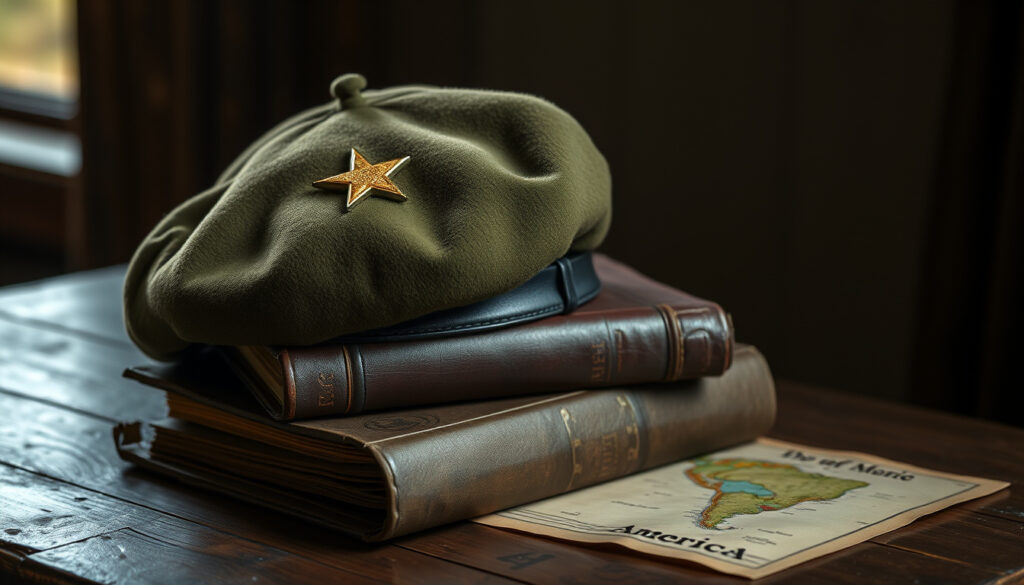
The Korda photograph, shot on 5 March 1960, captures Guevara wearing a beret with a star and looking into the distance. It has been reproduced on posters, T-shirts, and murals worldwide. HISTORY (history media outlet) calls it “the most famous photograph in the world” and notes that it was taken during a memorial for victims of the La Coubre explosion. The image’s universality—detached from its original context—has made Guevara an enduring symbol of rebellion.
Why was Che Guevara assassinated?
What led to Che Guevara’s capture in Bolivia?
After leaving Cuba in 1965, Guevara attempted to foment revolutions in the Congo and then in Bolivia. His Bolivian campaign was hampered by poor local support, difficult terrain, and the involvement of the CIA. PBS American Experience reports that Bolivian Rangers captured Guevara on 8 October 1967 at a ravine called El Yuro, after a brief firefight.
Who ordered Che Guevara’s execution?
Orders for his execution came from the Bolivian army command, with tacit approval from the CIA. HISTORY states that photos of Guevara’s body were made public and his hands were severed and delivered to Cuba to prove his death. The execution was carried out the next day, 9 October 1967, in the village of La Higuera.
What were the circumstances of his death?
Guevara was shot by a Bolivian army sergeant, Mario Terán, who volunteered for the task. After his death, his body was displayed to the media in Vallegrande before being buried in an unmarked grave. The Guardian describes that his hands were missing and his body was buried in unmarked graves. The location remained secret until 1997, when BBC History notes his remains were identified and returned to Cuba for reburial.
Bottom line: Guevara’s execution was a calculated act to end his revolutionary activities. The secrecy of his grave only deepened his legend, and 30 years later his remains were returned to Cuba amid a hero’s welcome.
What did Fidel Castro say when Che Guevara died?
What was Fidel Castro’s public reaction to Che’s death?
Castro announced Guevara’s death on 15 October 1967, six days after the execution. In a nationally broadcast speech, he declared three days of mourning. According to Encyclopaedia Britannica, Castro called Guevara “a model of revolutionary” and praised his “unbreakable revolutionary will.”
How did Castro honor Che Guevara?
Castro eulogized Guevara as an idealist who gave up everything for the revolution. He read excerpts from Guevara’s farewell letter, in which Che renounced his Cuban citizenship and salary. The speech was designed to immortalize Guevara as a martyr for the cause. BBC History notes that Castro later turned Guevara’s burial site in Cuba into a memorial and museum, cementing his status as a revolutionary icon.
Is Che Guevara considered a good guy?
What are the arguments for Che Guevara as a hero?
Supporters point to his role in overthrowing the Batista dictatorship, his commitment to social justice, and his advocacy for the poor. He voluntarily left a comfortable life to fight for the oppressed. PBS American Experience notes that many in Latin America still see him as a symbol of resistance against imperialism.
What are the criticisms of Che Guevara?
Critics highlight his involvement in executions of political prisoners after the Cuban Revolution, his uncompromising rejection of democracy, and his failed guerrilla campaigns that caused local casualties. The Guardian characterizes his legacy as “contentious even 50 years after his death.” Human rights groups have documented extrajudicial killings supervised by Guevara as head of La Cabaña prison.
Upsides
- Overshadowed the brutal Batista regime
- Advocated for redistribution of wealth and education
- Remains an inspirational figure for leftist movements worldwide
Downsides
- Oversaw summary executions and political purges
- Authoritarian governance style
- Failed guerrilla campaigns brought suffering to local populations
Bottom line: Che Guevara is not a binary good-or-bad figure. For the oppressed, he is a liberation hero; for those who value democratic institutions, his methods are a warning. The judgment depends heavily on which facts one prioritizes.
Timeline: Key dates in Che Guevara’s life
- 14 May 1928 – Born in Rosario, Argentina
- 1952 – Motorcycle journey across Latin America, witnessing poverty
- 1955 – Meets Fidel Castro in Mexico City
- 1956–1959 – Cuban Revolution; Guevara becomes a key commander
- 1965 – Leaves Cuba to foment revolution in Congo and Bolivia
- 8 October 1967 – Captured by Bolivian Army at El Yuro
- 9 October 1967 – Executed in La Higuera, Bolivia
The pattern: Guevara’s entire revolutionary career spanned barely a dozen years, yet the impact of those years shaped global politics for decades.
Confirmed vs. unclear: separating fact from rumor
Confirmed facts
- Che Guevara was executed by Bolivian forces on 9 October 1967 (PBS)
- He was a key figure in the Cuban Revolution (Britannica)
- He had Irish ancestry through his father’s family (The Guardian)
- His remains were discovered in 1997 and returned to Cuba (BBC History)
What’s unclear
- Exact details of his last words (multiple versions exist)
- Whether he directly authorized specific executions at La Cabaña
- His precise influence on Cuban foreign policy during the missile crisis
- The full extent of his personal involvement in other executions
Quotes that shape the narrative
“Che is the model of the revolutionary man. He was everything that a man should be: completely dedicated, completely honest, completely uncompromising.”
— Fidel Castro, eulogy for Che Guevara, October 1967 (Encyclopaedia Britannica)
“Above all, always be capable of feeling deeply any injustice committed against anyone, anywhere in the world.”
— Che Guevara, letter to his children, shortly before his death (Encyclopaedia Britannica)
These two quotes capture the core of the Guevara myth: Castro’s eulogy elevates him to sainthood, while Che’s own words emphasize a universal empathy that his critics argue he failed to practice in power.
For anyone trying to assess Che Guevara today, the Martin Luther King Jr.: Biography, Legacy, and Key Facts and Indira Gandhi Assassination: Reason, Aftermath, Legacy are two companion pieces that explore similar themes of leadership, martyrdom, and contested legacies.
en.wikipedia.org, drnishikantjha.com, en.wikipedia.org, ffrf.org, pbs.org, riomaisseguro.rio.rj.gov.br, youtube.com
For a deeper look at the contradictions behind the iconic image, see Che Guevaras polarizing legacy.
Frequently asked questions
What is Che Guevara’s height?
Che Guevara was approximately 5 feet 9 inches (175 cm) tall, according to biographical records.
How old was Che Guevara when he died?
He was 39 years old when executed on 9 October 1967.
What books did Che Guevara write?
He authored The Motorcycle Diaries, Guerrilla Warfare, and Socialism and Man in Cuba, among others.
What religion was Che Guevara?
He was raised Catholic but later became a staunch atheist, aligning with Marxist ideology.
Where was Che Guevara from?
He was born in Rosario, Argentina, and retained Argentine citizenship throughout his life.
What were Che Guevara’s last words?
Multiple accounts exist. One version reports he said, “Shoot, coward, you are only going to kill a man.” Another states he said, “I know you have come to kill me. Shoot, you are only going to kill a man.” The exact words remain unverified.
The unanswered questions about Guevara’s last words and his direct role in executions preserve his myth—and prevent easy closure for either admirers or critics.
For scholars and the broader public, the choice is not between hero and villain but between accepting the full record—including both the revolutionary idealism and the ruthless methods. For Latin Americans, the Guevara legacy is particularly sharp: he represents a dream of emancipation that, in practice, demanded a price in freedom and lives that many are still debating. The implication is clear: mythic heroes rarely survive the scrutiny of history, but some controversies are so deep they resist resolution altogether.
More related posts
 Nick Bosa: Career, Relationships, Controversies, and Politics
 Lisa Marie Presley Death Cause and Graceland Legacy
 Richard Dean Anderson: Health, Retirement, and Life After MacGyver
 Kirsten Dunst: Age, Husband, Children, Movies, Nationality & Health
 James Hunt: Cause of Death, Career, and Lauda Rivalry
 JFK Jr. Plane Crash: Cause, Last Words, and Key Facts
 Vancouver vs San Diego FC: Prediction, Stats & H2H
 Guy Lafleur: Heavy Smoker, NHL Legend, and His Lasting Legacy