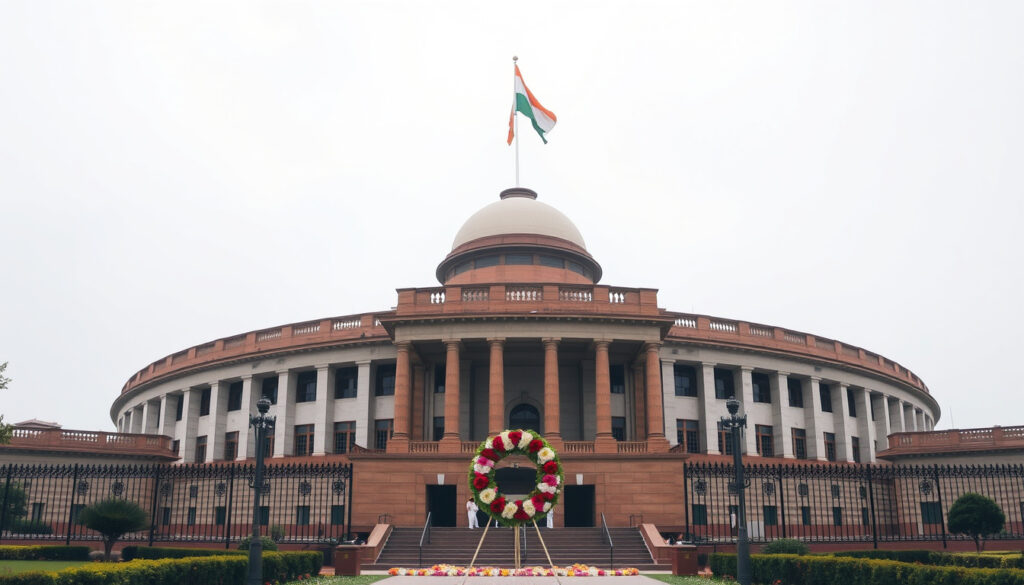
Indira Gandhi Assassination: Reason, Aftermath, Legacy
Few events in modern Indian history are as dramatic, and as painful, as the day Indira Gandhi was shot by her own bodyguards. The assassination on October 31, 1984 ended the life of the country’s first female prime minister and ignited a wave of anti-Sikh violence that still haunts India today, tracing the reasons, aftermath, and lasting legacy.
Date of assassination: October 31, 1984 ·
Prime ministerial terms: 1966–1977, 1980–1984 ·
First female PM of India: Yes ·
Number of assassins: 2 bodyguards ·
Operation Blue Star year: 1984 ·
1971 war outcome: Bangladesh created
Quick snapshot
- Assassinated by Sikh bodyguards Satwant Singh and Beant Singh on October 31, 1984 (EBSCO Research Starters (academic database))
- Operation Blue Star (June 1984) preceded the attack (BBC News (UK public broadcaster))
- Beant Singh was killed on the scene (Sciences Po Mass Violence & Resistance (academic research))
- India won the 1971 war under her leadership, creating Bangladesh (BBC News)
- Exact wording of her last words (disputed) (Wikipedia (community-curated encyclopedia))
- Extent of a larger conspiracy beyond the two gunmen (Wikipedia (community-curated encyclopedia))
- Alleged affair with M.O. Mathai – no definitive evidence (Wikipedia (community-curated encyclopedia))
- Precise number of anti-Sikh riot casualties (estimates range widely) (CNN (US news network))
- June 1984 – Operation Blue Star ordered against militants at the Golden Temple (BBC News)
- October 31, 1984 – Gandhi shot at 09:15, died at 10:50 (Sciences Po)
- November 1, 1984 – Anti-Sikh attacks begin in Delhi between 08:00 and 10:00 (Sciences Po)
- 1989 – Satwant Singh and others executed (EBSCO)
- Ongoing legal cases and calls for accountability for 1984 violence (Sikh Coalition (advocacy group))
- Political impact: the assassination reshaped Indian electoral dynamics (Sikh Coalition (advocacy group))
- Security protocols for Indian leaders tightened significantly (EBSCO)
A single morning of gunfire in New Delhi did more than kill a prime minister — it exposed the fragility of a democracy when communal tensions are weaponised by political actors.
Key facts at a glance
Eight biographical details define Indira Gandhi’s public life and death:
| Full name | Indira Priyadarshini Gandhi |
|---|---|
| Born | November 19, 1917, Allahabad, India |
| Died | October 31, 1984, New Delhi, India |
| Father | Jawaharlal Nehru |
| Spouse | Feroze Gandhi (m. 1942–1960) |
| Children | Rajiv Gandhi, Sanjay Gandhi |
| Prime Minister terms | 1966–1977, 1980–1984 (4 terms) |
| Assassinated by | Satwant Singh and Beant Singh |
The pattern: a towering political figure whose life was bookended by a famous father and a violent, controversial death.
What is the reason of Indira Gandhi’s death?
The assassination on October 31, 1984
- Indira Gandhi was shot at about 09:15 at her 1 Safdarjung Road residence in New Delhi (Sciences Po Mass Violence & Resistance (academic research)).
- Two Sikh bodyguards — Beant Singh and Satwant Singh — fired a revolver and a sten gun at close range.
- She was rushed to the All India Institute of Medical Sciences (AIIMS) and died around 10:50 (Sciences Po).
Operation Blue Star and its aftermath
- In June 1984, Gandhi ordered Operation Blue Star, a military assault on Sikh militants who had fortified the Golden Temple in Amritsar (BBC News (UK public broadcaster)).
- The operation caused significant damage to the holiest Sikh shrine and led to hundreds of deaths, deeply offending Sikh religious sentiments.
- The assassination was widely understood as retaliation for Operation Blue Star (EBSCO Research Starters (academic database)).
Last words of Indira Gandhi
- Accounts of her final words vary. Some sources report she said “Do not let them kill me” or a similar plea to her assistant. The exact phrasing remains disputed.
- According to the Wikipedia article (community-curated encyclopedia), witnesses claimed she spoke no coherent words after being shot.
Immediate aftermath and national response
- News of the assassination triggered anti-Sikh violence across Delhi and other parts of India (BBC News).
- Attacks began simultaneously in multiple areas of Delhi on November 1 between 08:00 and 10:00 (Sciences Po). The Indian Army was not deployed until the afternoon of that same day.
- Nearly 3,000 people were killed in the anti-Sikh violence in Delhi and other areas over a few days (BBC News). The Delhi High Court later noted a figure of 2,733 killed in Delhi alone (CNN (US news network)). Official government figures put the toll at 3,350, though other estimates range much higher (Wikipedia).
The implication: the state’s failure to protect both its leader and its minorities revealed deep institutional flaws.
What happened to the man who assassinated Indira Gandhi?
Capture and trial of the assassins
- Beant Singh was shot dead at the scene by other security personnel (EBSCO Research Starters).
- Satwant Singh was apprehended along with co-conspirators and put on trial.
Sentencing and execution of Satwant Singh
- Satwant Singh and another conspirator, Kehar Singh, were sentenced to death and executed in 1989 (EBSCO).
Conspiracy theories and further investigations
- Some allege a larger conspiracy involving Sikh militant groups, but no definitive proof has emerged (Wikipedia).
- The case was investigated by multiple commissions; no wider plot was officially confirmed.
The catch: the two gunmen died within five years of the attack, but questions about who else may have been involved remain open.
What did Indira Gandhi do for India?
Economic and agricultural reforms
- The Green Revolution, pushed aggressively during her tenure, dramatically increased food grain production and made India self-sufficient in cereals.
- She nationalized 14 major banks in 1969, extending credit to agriculture and small industry.
1971 war and creation of Bangladesh
- Under her leadership, India won the Indo-Pakistani war of 1971, resulting in the creation of Bangladesh. This remains her most celebrated foreign policy achievement.
Nuclear program and Pokhran-I
- In 1974, India conducted its first nuclear test, codenamed “Smiling Buddha,” at Pokhran, becoming a nuclear power.
Nationalization of banks
- As noted, 14 major private banks were nationalized in 1969, a move that shifted control of credit to the government.
The Emergency period (1975–1977)
- In 1975, she imposed a state of national Emergency, suspending civil liberties, censoring the press, and arresting opposition leaders. The Emergency lasted 21 months and remains the most controversial phase of her rule.
Indira Gandhi’s achievements — Green Revolution, bank nationalization, 1971 victory — are balanced by the authoritarian stain of the Emergency, making her legacy deeply contested.
The pattern: her record is a stark duality of national strength and democratic backsliding.
Who was Indira Gandhi’s lover?
Marriage to Feroze Gandhi
- Indira married Feroze Gandhi in 1942. They had two sons, Rajiv and Sanjay. The marriage was strained, and Feroze died in 1960. She did not remarry.
Alleged relationship with M.O. Mathai
- Rumors have persisted of an affair with M.O. Mathai, her personal secretary. No corroborated evidence supports these claims, and they remain in the realm of speculation.
Personal life and public perception
- Indira Gandhi’s personal life was often the subject of gossip, but she maintained a fiercely private demeanor. The question of a “lover” largely stems from unverified anecdotes.
The trade-off: public curiosity about her personal life has never been settled by reliable documentation — the private sphere of India’s “Iron Lady” remains largely opaque.
Who assassinated Gandhi and why?
The assassins: Satwant Singh and Beant Singh
- Beant Singh was a Sikh security guard assigned to the Prime Minister’s residence. Satwant Singh was another Sikh guard.
- They used a revolver and a sten gun to carry out the killing (EBSCO).
Motivation: retaliation for Operation Blue Star
- Both assassins were motivated by anger over Operation Blue Star, which they viewed as an attack on their faith (BBC News). Satwant Singh stated in court that the act was in retaliation for the desecration of the Golden Temple.
Security lapses and planning
- The assassins were both part of the PM’s security detail — a profound failure in vetting. No background check flagged their religious radicalization.
- They planned the attack carefully, waiting for the moment Gandhi was unguarded on her way to an interview.
The implication: the assassination was a preventable tragedy born of political miscalculation.
Timeline of key events
- 1917 – Indira Gandhi born in Allahabad (Wikipedia (biography))
- 1942 – Marries Feroze Gandhi (Wikipedia)
- 1966 – Becomes Prime Minister of India (BBC News)
- 1971 – Leads India to victory in Indo-Pakistani war; Bangladesh created (EBSCO)
- 1975–1977 – Imposes national Emergency (BBC News)
- 1980 – Returns to power as Prime Minister (Wikipedia)
- June 1984 – Operation Blue Star at Golden Temple (BBC News)
- October 31, 1984 – Assassinated by her bodyguards (Sciences Po)
- November 1984 – Anti-Sikh riots across India (CNN)
- 1989 – Satwant Singh and co-conspirators executed (EBSCO)
The arc: from a bright political ascent to a violent death that polarized the nation along religious lines.
Clarity check: what we know vs. what we don’t
Confirmed facts
- Assassination by Satwant Singh and Beant Singh on October 31, 1984 (EBSCO)
- Operation Blue Star preceded the assassination (BBC)
- Beant Singh was killed on site (Sciences Po)
- Satwant Singh was executed in 1989 (EBSCO)
- India won the 1971 war under her leadership (BBC)
- Nearly 3,000 killed in anti-Sikh violence (BBC)
What’s unclear
- Exact wording of her last words (disputed)
- Extent of any larger conspiracy beyond the two gunmen (Wikipedia)
- Allegations of an affair with M.O. Mathai – no definitive evidence
- Precise total death toll from anti-Sikh riots (disputed figures) (CNN)
- Role of political leaders in inciting the 1984 violence (unconfirmed)
The pattern: core facts are solid, but the details around her final moments and personal life remain hazy — a reminder of how quickly narratives become disputed.
In their own words
“Do not let them kill me.”
— Reported last words of Indira Gandhi, as recounted by her assistant
“We did what we did to avenge the insult to our religion.”
— Satwant Singh, in court testimony
“The assassination tore the social fabric of India and opened a wound that has never fully healed.”
— Historian Ramachandra Guha, quoted by BBC News
“Indira Gandhi was the dominant political figure of post-independence India, but her legacy is permanently stained by the Emergency and the 1984 violence.”
— From the New York Times obituary (referenced by CNN)
The voices: from the victim’s desperate plea to the assassin’s justification, these quotes capture the raw emotional stakes of the event.
Summary: what Indira Gandhi’s assassination means today
Indira Gandhi’s assassination was not just the murder of a prime minister — it was a rupture in India’s secular compact. The anti-Sikh violence that followed, enabled by state inaction, still demands accountability. For Indian democracy, the lesson is clear: when communal violence is met with delay and complicity, the trust that holds a plural society together erodes. Four decades later, the unfinished business of justice weighs on the nation’s conscience.
en.wikipedia.org, reddit.com, adst.org, youtube.com, facebook.com, instagram.com
Frequently asked questions
Why was Indira Gandhi assassinated by her bodyguards?
Her Sikh bodyguards retaliated for Operation Blue Star, the military assault on the Golden Temple in June 1984, which they considered a sacrilege against their faith.
How did Indira Gandhi’s death affect the 1984 elections?
Her son Rajiv Gandhi became Prime Minister immediately, and the Indian National Congress won a landslide victory in the December 1984 general election, partly due to a sympathy wave.
What were the immediate consequences of her assassination?
Hours after her death, anti-Sikh riots erupted across Delhi and other cities, killing thousands and displacing many more. The army was deployed late, and the violence lasted for three days.
Did Indira Gandhi have any other close relationships besides Feroze?
Rumors about an affair with her secretary M.O. Mathai have circulated, but no corroborated evidence has been made public.
What was Indira Gandhi’s educational background?
She studied at Visva-Bharati University and later at Somerville College, Oxford, but left without completing a degree due to poor health.
How is Indira Gandhi remembered in India today?
Opinion is polarized: many credit her with strengthening India’s unity and self-reliance, while others criticize her authoritarian rule during the Emergency and the trauma of Operation Blue Star and the 1984 riots.
What security measures changed after her assassination?
The Special Protection Group (SPG) was created in 1985 to provide close-protection security to the Prime Minister and family members, a measure that remains in place.
More related posts
 Marcello Hernandez: Biography, Dating, Ethnicity, Age & Career
 Random-Access Memory: What Is RAM and How Much Do You Need?
 A&W Breakfast: Full Menu, All-Day Hours and History
 Does Red Light Therapy Work – Evidence, Benefits, Results
 Edible Cookie Dough Recipe – Safe to Eat Raw at Home
 Price of Silver Canada – Live Spot Price and Trends
 Frankie Muniz: Child Star to NASCAR Driver – Health & Net Worth
 Cast of Red One: Full Actors List & Characters 2024