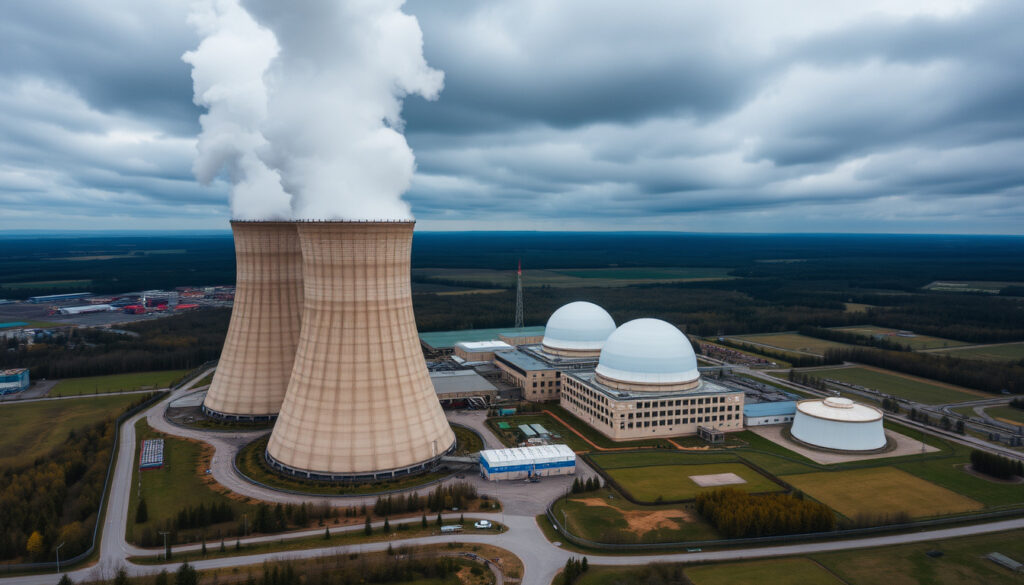
Zaporizhzhia Nuclear Power Plant: Control, News & Status
For more than three years, Europe’s largest nuclear power plant has sat in the middle of an active war zone. The Zaporizhzhia facility, once one of the continent’s most important energy producers, has become a flashpoint where military operations and nuclear safety collide in ways that international observers say have no modern precedent. The plant has been shelled, drone-struck, and occupied—all while its six reactors sit cold and its staff work under extraordinary pressure.
Largest in Europe: Yes, among top 10 worldwide · Current Control: Russian forces · Reactors: 6 units · Recent Incident: Worker killed in drone attack · Blackouts: 14 full blackouts since occupation
Quick snapshot
- Russian forces occupied ZNPP on March 4, 2022 (Wikipedia)
- Six reactors, Europe’s largest nuclear facility (Wikipedia)
- Plant remains shut down; IAEA observers on site since autumn 2022 (European Nuclear Society)
- Future recaptured status under ongoing conflict (Wikipedia)
- Long-term radiation risks from sustained military activity (European Nuclear Society)
- Progress on Russian regulatory compliance plans announced for 2028 (Wikipedia)
- March 2022: Russian capture; August 2022: shelling damages sensors (Wikipedia)
- April 2024: Drone strike hits Unit 6 reactor dome, first since November 2022 (Wikipedia)
- April 2026: Employee killed in Ukrainian drone attack (Devdiscourse)
- Russian-installed management targets 2028 restart of two units (Wikipedia)
- Ukraine continues to reject any restart as violating safety standards (Wikipedia)
- IAEA calls for demilitarization; drone activity continues to escalate (UN News)
The following table summarizes key operational and status attributes of the Zaporizhzhia Nuclear Power Plant based on verified sources.
| Attribute | Value |
|---|---|
| Location | Zaporizhzhia Oblast, southeastern Ukraine |
| Operator | Energoatom (Ukrainian), under Russian military control since March 2022 |
| Capacity | Approximately 6 GW |
| Reactor count | 6 units |
| Status | Shut down, monitored by IAEA |
| Built | 1980s–1990s |
| Occupation | March 4, 2022 |
| IAEA presence | Continuous observers since autumn 2022 |
Does Russia Still Control Zaporizhzhia Nuclear Power Plant?
Russian forces have maintained physical control of the Zaporizhzhia Nuclear Power Plant since March 4, 2022, when they seized the facility during the Battle of Enerhodar. That occupation marked the first time in history that an operational nuclear power plant experienced full-scale military capture, setting a precedent that nuclear safety experts continue to grapple with. The International Atomic Energy Agency has maintained continuous observers on site since autumn 2022, but those monitors have no enforcement power.
Under occupation, Russian forces assumed control of security and access systems at the facility, a move that violated Ukrainian nuclear safety legislation, according to the US Department of Energy. Russian-installed management subsequently took over daily operations, with director Yuriy Chernichuk announcing in early 2025 that the facility aimed for compliance with Russian nuclear regulations by 2028 and was exploring the potential restart of two reactor units. Ukraine has rejected any discussion of restart, calling it a violation of international nuclear safety standards.
Current occupation status
The Russian-installed administration operates the plant under conditions that multiple international bodies have characterized as dangerous. The US Department of Energy documented that Russian personnel have mistreated Ukrainian staff, including cases of detention and physical abuse, creating what officials described as a hostile environment for the workers who remain. Military vehicles have been stationed within the plant’s perimeter, a practice that violates core principles of nuclear site protection. The plant’s external power connections have been attacked repeatedly, forcing reliance on emergency diesel generators that can sustain cooling systems for approximately 20 days before fuel runs out.
IAEA monitoring role
IAEA Director-General Rafael Grossi has described the situation as a continuous nuclear safety crisis requiring maximum restraint from all parties. The organization’s experts have documented incidents ranging from the placement of mines near the plant in mid-2023 to the ongoing drone activity that has escalated since 2024. While IAEA observers can report conditions and issue warnings, they lack any mechanism to compel compliance or remove military equipment from the site.
What is Going on with the Zaporizhzhia Power Plant?
The Zaporizhzhia Nuclear Power Plant sits in the middle of an active war zone, and its situation has only grown more dangerous as the conflict has evolved. Drone strikes, artillery fire, and power losses have become recurring features of life at the facility, with both Russia and Ukraine accusing each other of attacks that endanger nuclear safety. The most recent confirmed incident occurred on April 27, 2026, when a Ukrainian drone struck the plant’s transport department, killing one employee—a driver working under Russian control.
This was not an isolated event. The facility has experienced at least 14 full blackouts of its external power supply since the occupation began, each time forcing operators to switch to emergency diesel generators. Off-site power is critical for safely maintaining the plant’s reactors in their cold shutdown state, and repeated losses of that supply represent one of the most persistent safety risks identified by international monitors.
Latest news updates
The April 2026 drone attack that killed a worker was reported by Russian-installed management via Telegram, making independent verification difficult, as the source falls into a lower confidence tier. However, the incident fits a pattern of escalating activity around the facility that has been documented by higher-confidence sources including the United Nations and the Arms Control Association.
The destruction of the Kakhovka Dam in June 2023, which occurred under Russian control, added another complication by disrupting the facility’s cooling water supply. The plant now relies on alternative water sources, a situation that further strains the already compromised infrastructure.
Safety concerns
The International Atomic Energy Agency has repeatedly warned that military activity near nuclear facilities violates fundamental safety principles. Director-General Grossi stated that the April 2024 drone strike on the Unit 6 reactor dome represented a significant escalation because it was the first direct targeting of the facility since November 2022. Technical analysis from the European Nuclear Society suggests that drone damage to containment structures is unlikely to cause radioactive release due to multiple engineering barriers and the plant’s cold shutdown state, but the cumulative effect of repeated attacks on power infrastructure remains a serious concern.
Every loss of external power at ZNPP forces the facility to depend on diesel generators. With 20 days of fuel stored, sustained attacks on power lines create a race against time—one that international observers say must not be allowed to run out.
Where is Zaporizhzhia Nuclear Power Plant?
The Zaporizhzhia Nuclear Power Plant sits on the banks of the Dnipro River in southeastern Ukraine, near the city of Enerhodar. The plant occupies a strategic position in Zaporizhzhia Oblast, roughly 500 kilometers southeast of Kyiv. Its placement made it a significant energy producer for all of Ukraine before the 2022 invasion, powering millions of homes across the country through its six reactors.
Location in Ukraine
Enerhodar was a purpose-built city constructed in the 1970s to house the nuclear power plant’s workers and their families. The town sits between the Dnipro River and the plant itself, making it difficult to separate civilian infrastructure from military targets in the current conflict. The Kakhovka Reservoir, which once provided cooling water to the plant, was disrupted when the Kakhovka Dam was destroyed in June 2023.
The facility’s location along a major river and its proximity to civilian population centers mean that any nuclear incident would have consequences far beyond the plant’s immediate perimeter.
On map
Geographically, the plant sits in a region that has seen some of the heaviest fighting since Russia’s 2022 invasion. The surrounding Zaporizhzhia Oblast has been contested territory, with Ukrainian forces pushing against Russian defensive lines to the south and east. The plant itself lies just west of the current front lines, meaning that military activity in the area directly threatens the facility.
What is the Capacity of Zaporizhzhia Nuclear Power Plant?
The Zaporizhzhia Nuclear Power Plant was once one of the most powerful nuclear facilities in Europe, with a nameplate capacity of approximately 6 gigawatts across its six reactors. When fully operational, the plant could produce enough electricity to supply approximately 4 million homes, making it a cornerstone of Ukraine’s energy infrastructure. Its six reactors, each capable of operating independently, gave the plant flexibility that most nuclear facilities lack.
Power output details
Each of the six VVER-1000 reactors at the facility had a capacity of around 1,000 megawatts, ranking the plant among the top 10 largest nuclear power stations globally. Before the 2022 invasion, ZNPP accounted for roughly 40 percent of Ukraine’s nuclear-generated electricity, with the country’s other major facilities including Rivne, Khmelnytskyy, and South Ukraine Nuclear Power Plant.
Comparison to others
At 6 GW total capacity, ZNPP exceeds the output of the South Ukraine Nuclear Power Plant, which has two reactors, and most Western European nuclear stations. The largest nuclear plants globally include facilities like China’s Taishan and South Korea’s Kori, but ZNPP remains Europe’s largest despite being offline since late 2022. That status makes its continued shutdown under occupation all the more significant for European energy security.
Recent Incidents at Zaporizhzhia Nuclear Power Plant
The timeline of incidents at Zaporizhzhia Nuclear Power Plant reads like a catalog of escalating nuclear risk. From the initial shelling in March 2022 that damaged Unit 1 to the drone attacks that have continued into 2026, the facility has experienced a series of events that international monitors have repeatedly called unprecedented. The April 2026 attack that killed a worker represents the latest—and according to some assessments, most troubling—escalation in a pattern that shows no signs of abating.
Both Russia and Ukraine blame each other for attacks on the facility, a dynamic that international observers say makes attribution difficult and accountability nearly impossible. The European Nuclear Society has documented multiple instances where drone strikes targeted specific infrastructure components, including electrical substations and the reactor dome itself, suggesting a level of precision that distinguishes these attacks from earlier artillery exchanges.
Drone strikes
April 7, 2024 marked a turning point when a drone strike directly hit the reactor dome of Unit 6, the first such targeting since November 2022. The International Atomic Energy Agency confirmed the incident but reported that no critical infrastructure was damaged. Nevertheless, Director-General Grossi stated that the strike violated key principles designed to prevent nuclear accidents.
Subsequent drone strikes on June 19 and 21, 2024 targeted electrical substations in Enerhodar near the plant, damaging radiological monitoring equipment. On August 10, 2024, artillery struck the power and water substation in Enerhodar, affecting plant staff. Throughout August 2024, drone activity near the perimeter continued, with explosions and artillery audible from the facility, according to United Nations reporting.
Fires and explosions
The August 2022 shelling caused significant damage to radiation sensors, nitrogen-oxygen stations, external power supplies, transformers, and cabling at the facility. Fires near the plant have been reported on multiple occasions, though none have resulted in a Chernobyl-level incident. Technical analysis suggests this is partly because the plant’s cold shutdown state and multiple containment barriers provide protection against radioactive release even when external structures are damaged.
Radiation risks
Despite the frequency of attacks, no radiation release has been confirmed from any incident at ZNPP. The European Nuclear Society’s technical analysis attributes this resilience to the plant’s engineering design, which includes multiple barriers between radioactive material and the external environment. However, experts consistently warn that the cumulative effect of power losses and infrastructure damage could eventually compromise safety systems if the pattern continues.
“Yet again we see an escalation of the nuclear safety and security dangers facing the Zaporizhzhya Nuclear Power Plant.”
— Rafael Mariano Grossi, IAEA Director-General
“Drone usage against the plant and its vicinity is becoming increasingly more frequent and must stop.”
— Rafael Mariano Grossi, IAEA Director-General, June 2024
The incidents table below consolidates documented attacks and security breaches at the plant since Russian occupation began.
| Date | Incident | Source confidence |
|---|---|---|
| March 3–4, 2022 | Initial shelling damages Unit 1; Russian forces capture plant | High |
| August 8, 2022 | Shelling damages radiation sensors, power infrastructure | High |
| June 2023 | Kakhovka Dam destroyed; cooling water supply disrupted | High |
| April 7, 2024 | Drone strike hits Unit 6 reactor dome | High |
| June 19–21, 2024 | Drone strikes target Enerhodar substations | High |
| August 2024 | Drone strikes near perimeter; artillery hits infrastructure | High |
| April 27, 2026 | Drone attack kills transport department employee | Medium |
What’s confirmed
- Russian military control since March 2022
- Plant remains offline in cold shutdown
- No Chernobyl-level incident has occurred
- IAEA observers present since autumn 2022
- At least 14 full blackouts of external power
- Emergency diesel generators available with 20 days of fuel
What’s uncertain
- Future recaptured status under ongoing conflict
- Detailed radiation monitoring data from 2026 attack
- Progress on Russian regulatory compliance plans
- Attribution for specific drone attacks
- Long-term sustainability of diesel backup systems
Related reading: power outages and monitoring
energy.gov, youtube.com, nti.org, armscontrol.org, world-nuclear-news.org
Safety fears at Zaporizhzhia parallel the harrowing events dramatized in the Chernobyl miniseries that exposed systemic nuclear vulnerabilities.
Frequently asked questions
What caused the recent worker death at Zaporizhzhia NPP?
A drone attack on April 27, 2026 struck the transport department of the occupied facility, killing one employee who worked as a driver under Russian control. Russian-installed management reported the incident via Telegram.
Is the Zaporizhzhia nuclear power plant at risk of meltdown?
The plant is in cold shutdown, which significantly reduces meltdown risk compared to operational reactors. However, repeated losses of external power supply force reliance on emergency diesel generators, and sustained damage to cooling infrastructure could eventually compromise safety systems if the situation is not resolved.
How many reactors does Zaporizhzhia NPP have?
The facility has six VVER-1000 reactors, each with a capacity of approximately 1,000 megawatts, giving the plant a total nameplate capacity of roughly 6 gigawatts. All six reactors have been offline since late 2022.
Has there been radiation release from Zaporizhzhia NPP?
No radiation release has been confirmed from any incident at the facility since Russian occupation began in March 2022. Technical analysis attributes this to the plant’s multiple containment barriers and cold shutdown state, but experts warn that continued military activity creates ongoing risk.
Why is Zaporizhzhia NPP the largest in Ukraine?
With 6 GW of capacity across six reactors, ZNPP accounts for roughly 40 percent of Ukraine’s nuclear-generated electricity when operational. That output exceeds any other single facility in the country, making the plant’s shutdown under occupation a significant loss for Ukrainian energy infrastructure.
What role does IAEA play at Zaporizhzhia?
The International Atomic Energy Agency has maintained continuous observers on site since autumn 2022. These experts monitor conditions, document incidents, and issue public warnings about safety risks, but they have no enforcement authority. Director-General Grossi has repeatedly called for maximum restraint and demilitarization of the site.
Could the plant be restarted under current conditions?
Russian-installed management has discussed potential restart of two units by 2028, but Ukraine rejects any restart under occupation as violating international nuclear safety standards. The US Department of Energy has documented mistreatment of staff and military occupation of the site, conditions that multiple bodies say make safe operation impossible.
More related posts
 Chiwetel Ejiofor: Biography, Movies, and Personal Life
 How to Roast Sweet Peppers: Oven, Stove, Air Fryer
 Who Called Me from This Phone Number? Free Lookup Guide
 What Causes Poor Sleep Quality? 7 Key Factors and How to Fix It
 Julian McMahon Cause of Death: Cancer Battle at 56
 Income Tax Brackets Ontario 2025-2026: Rates & Examples
 152 cm in Feet – Exact Conversion and Height Guide
 Hillsboro Funeral Home Obituaries – Latest PEI Death Notices