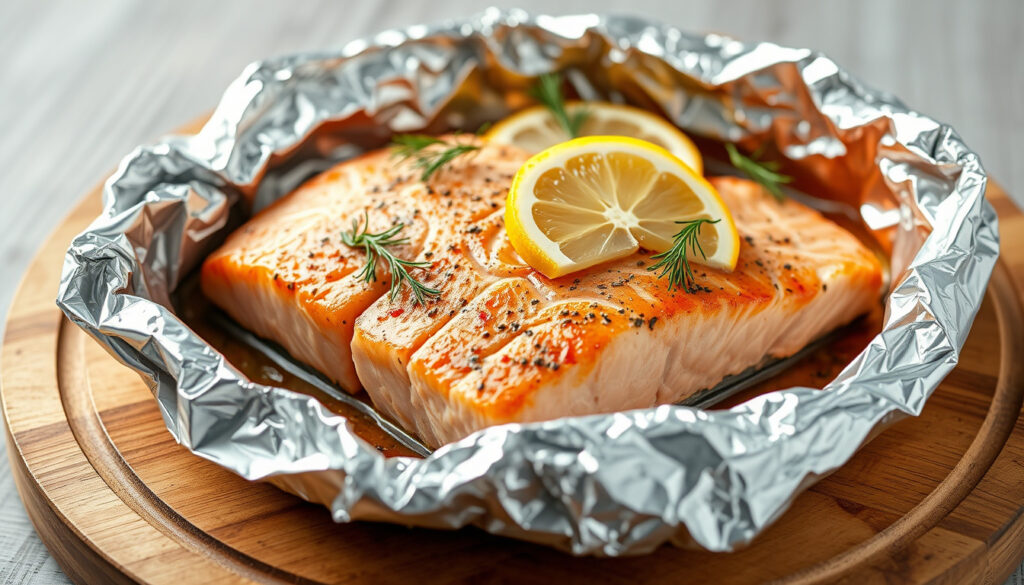
Salmon in the Oven: Times, Foil Tips & Chef Recipes
Few things in the kitchen feel as rewarding as pulling perfectly cooked salmon from the oven—flaky, golden, and done exactly to your liking. The good news? You don’t need restaurant training to get there. A handful of variables—temperature, timing, and whether or not to wrap your fillet—make all the difference between dry, overdone fish and the kind that practically melts on your fork.
Typical oven temperature: 180–200°C ·
Average bake time: 20–25 minutes ·
Ideal internal temp: 63°C ·
Common prep: Brush with oil or butter ·
Foil option: Optional for moisture
Quick snapshot
- 180–200°C is the standard baking range for oven salmon (Laura Fuentes recipe guide)
- FDA sets safe doneness at 145°F (63°C) internal temperature (WellPlated cooking instructions)
- Exact time varies by fillet thickness—no universal rule
- Different chefs recommend conflicting resting temperatures
- Preheat → Assemble packet → Bake 15–20 min → Rest 5 min → Optional broil 3 min
- Total active time under 30 minutes for most recipes
- Decide foil vs. no-foil based on your texture preference
- Choose your seasoning approach: simple salt-and-herb or richer marinades
These parameters represent the consensus across multiple tested recipes from food bloggers and chef methods.
| Parameter | Value |
|---|---|
| Standard preheat | 180°C / 350°F |
| Portion size | 4–6 oz fillets |
| Doneness check | Flakes easily with fork |
| Rest time | 3–5 minutes |
| Foil size per fillet | 12×12 inch squares |
| Rack position | Upper third of oven |
How long should you cook your salmon in the oven?
Cooking time depends on three factors: oven temperature, fillet thickness, and your preferred level of doneness. Most home cooks land in the 15–25 minute range, and a probe thermometer removes the guesswork entirely.
At 180 degrees (350°F)
At this moderate temperature, plan for 20–25 minutes per inch of thickness. Laura Fuentes recipe guide notes that thicker fillets need the full 25 minutes to reach safe internal temperature. The lower heat gently coaxes the fish through without risk of a raw center.
At 200 degrees (400°F)
The sweet spot for most foil recipes sits here. At 400°F, salmon fillets cook through in 15–20 minutes depending on thickness (Wholesome Yum recipe collection). This higher heat works particularly well for foil-packet methods where trapped steam accelerates cooking.
At 400°F (204°C) for no-foil baking
Without foil’s moisture retention, the skin crisps and the top browns faster. Expect 12–15 minutes for thin fillets, up to 20 minutes for thick cuts. Kristine’s Kitchen cooking guide recommends positioning the rack in the upper third of the oven for even heat distribution. A 3-minute broil finish after removing from foil adds color without overcooking.
Thickness matters more than weight. A 6-ounce fillet that’s 1 inch thick cooks faster than a 4-ounce slab at 1.5 inches. Measure the thickest part of your fillet before you preheat the oven.
Checking internal temperature
The FDA classifies salmon safe at 145°F (63°C) internal temperature (WellPlated cooking instructions). However, many cooks target medium-rare doneness at 125–135°F, where the center remains translucent and tender (Mom On Timeout recipe). If you prefer that texture, remove the salmon at 137–140°F and let carryover heat finish the job during a 5-minute rest.
Should you cover salmon with foil when baking?
This debate splits food writers and home cooks alike. The honest answer: it depends on what you want from your salmon. Foil changes the cooking environment dramatically, and understanding those trade-offs lets you make the right call for your meal.
Pros and cons of foil
Foil creates a sealed pocket where steam builds up and cooks the salmon from all sides. The result is consistently moist flesh, even on thicker cuts that might dry out with direct oven heat. Laura Fuentes recipe guide describes how the trapped heat “bakes the salmon from the inside,” which explains the reliable texture.
The downside? No crispy top. If you’re serving skin-on salmon and want that golden crackle, foil packets leave you with steamed rather than seared results.
Foil also makes it harder to add finishing glazes. Any sauce applied before sealing needs to withstand 15+ minutes of steam without burning—lemon-heavy marinades particularly risk turning bitter.
No-foil direct bake method
Skipping foil means the top surface dehydrates slightly under dry oven heat, creating a light crust. Kristine’s Kitchen cooking guide suggests a brief broil at the end to deepen color without drying the interior. This method works best for skin-on fillets where you want the skin crisp and the flesh juicy.
Both approaches produce excellent salmon—it’s purely a texture preference. A helpful compromise: bake in foil for the initial cook, then unwrap and broil for 3 minutes for the best of both worlds.
How does Gordon Ramsay cook salmon in the oven?
Gordon Ramsay’s approach leans toward bold flavors and high heat. His published method emphasizes seasoning simplicity and fast cooking to preserve the salmon’s natural richness.
The Ramsay method typically starts with a screaming-hot oven—around 425°F (220°C)—with the salmon placed skin-side down on a foil-lined tray. A drizzle of olive oil, salt, and cracked black pepper constitute the base; Ramsay adds lemon slices and fresh herbs like thyme or dill for aromatics. The high heat demands just 10–12 minutes for a standard fillet, with doneness checked by touch.
The finishing touch often involves a splash of white wine or a pat of cold butter placed on the salmon as it comes out of the oven. The butter melts into the flesh, creating a glossy, restaurant-quality finish that home cooks consistently report as the “wow factor” in their weeknight dinners.
Ramsay’s method prioritizes texture over temperature precision. If you prefer your salmon with a firm, lightly charred exterior and a buttery finish, this approach delivers in under 15 minutes total.
What is the healthiest way to cook salmon?
Oven baking ranks among the healthiest methods for preparing salmon because it requires minimal added fat while preserving the fish’s omega-3 fatty acids—heat-sensitive nutrients that degrade with high-temperature searing or frying.
The FDA’s 145°F (63°C) target for fully cooked salmon aligns well with baking methods that cook evenly without flash-frying. WellPlated cooking instructions emphasizes that baking at moderate temperatures (350–400°F) maintains the salmon’s nutritional profile better than pan-searing at 400°F+.
Baking vs. other methods
- Grilling: Adds char and smoky flavor but exposes fish to direct high heat—omega-3 retention drops slightly
- Pan-searing: Requires oil for non-stick cooking; higher heat degrades some omega-3s
- Poaching: Excellent for omega-3 retention but adds water to the flesh
- Microwaving: Causes uneven hot spots; not recommended
For the most nutrient-dense result, Kristine’s Kitchen cooking guide recommends brushing fillets with a small amount of olive oil (1–2 teaspoons) and seasoning with salt, pepper, and fresh herbs. This keeps added fat minimal while ensuring the surface doesn’t dry during baking.
Medium-rare salmon (125–135°F) retains more omega-3s than fully cooked (145°F+) because shorter, cooler cooking causes less nutrient breakdown. If nutrition is your priority, target the lower end of the doneness range.
How to cook salmon in the oven Mary Berry style
Mary Berry’s approach brings a slightly more British sensibility to oven salmon—comfort food with understated elegance. Her published recipes favor straightforward techniques that home cooks can execute without anxiety.
The Berry method typically begins with an ovenproof dish rather than a baking sheet. Fillets are placed in the dish with a pat of butter and a squeeze of lemon juice, then covered loosely with foil for the first half of cooking. The foil comes off for the final 5–8 minutes to allow the surface to brown slightly.
One distinctive element in Berry’s approach is her occasional use of a Parmesan crust—sprinkling grated cheese over the fillet before the uncovered finishing phase. This technique adds savory depth and textural contrast without overwhelming the salmon’s flavor.
Cooking temperature stays in the standard 180–200°C (350–400°F) range, with timing adjusted to fillet thickness. Berry’s recipes typically call for 15–20 minutes at 180°C (350°F), with the dish positioned on the middle oven rack.
Upsides
- Even, gentle cooking in ovenproof dish
- Parmesan crust adds flavor variety
- Flexible timing with foil cover/uncover
- Suitable for entertaining batches
Downsides
- No crispy skin from dish method
- Requires ovenproof dish (not all kitchens have one)
- More cleanup than foil packet
The implication: Berry’s method trades convenience for presentation—ideal when you have time to bake and want that golden cheese finish.
Step-by-step: Foolproof oven salmon
Follow these steps whether you choose foil or no-foil method—adjust steps 5–6 based on your preference.
- Preheat to 180°C (350°F) or 200°C (400°F) depending on your chosen method and timing preference
- Pat salmon fillets dry with paper towels—moisture on the surface prevents seasoning from adhering
- Season generously with salt, pepper, and optional herbs (dill, thyme, parsley)
- Lightly brush with oil or melted butter (1–2 teaspoons per fillet) for surface moisture
- For foil method: Place fillet skin-side down on 12×12 inch foil, add aromatics (lemon, garlic), seal loosely, place on baking sheet
- For no-foil method: Place skin-side down on lightly oiled baking sheet or ovenproof skillet
- Bake for 15–20 minutes at 200°C (400°F) or 20–25 minutes at 180°C (350°F)
- Check temperature with instant-read thermometer—the thickest point should read 125–135°F for medium-rare or 145°F for fully cooked
- Rest 5 minutes before serving (temperature will rise 3–5°F during rest)
- Optional: Broil uncovered for 3 minutes for color finish
“I typically remove my salmon early (anywhere between 137 and 140 degrees F), cover the salmon with foil, then let it rest for about 5 minutes.”
— WellPlated cooking instructions
“The acid in the lemon juice will start to ‘cook’ the fish, similar to ceviche. Brush it on just before baking, not hours ahead.”
The most common mistake home cooks make is skipping the resting period. Carryover heat continues cooking the salmon after you remove it from the oven. A 5-minute rest gives you control over final doneness and prevents the dry, overcooked edges that plague rushed salmon.
For anyone cooking salmon multiple times per week, an instant-read thermometer pays for itself immediately. At roughly $20, it replaces guesswork with precision—and the difference between a $15 piece of fish that turns out perfect versus mediocre is worth the investment. If you’re looking for side dish inspiration, consider pairing your salmon with a crisp Sauvignon Blanc to complement the flavors.
Bottom line: Oven salmon isn’t complicated, but it rewards attention to three variables: temperature (higher = faster), thickness (measure before baking), and resting (never skip it). The foil vs. no-foil decision comes down to your preference for steamed texture versus crispy top. For weeknight dinners, foil wins on reliability; for special occasions, the uncovered method earns its keep. Home cooks who follow this approach consistently report perfectly cooked salmon that rivals restaurant quality.
Frequently asked questions
How to cook salmon in the oven?
Preheat your oven to 180–200°C (350–400°F). Pat fillets dry, season with salt and pepper, brush lightly with oil. Bake skin-side down for 15–20 minutes at 200°C or 20–25 minutes at 180°C until internal temperature reaches 145°F for fully cooked or 125–135°F for medium-rare. Rest 5 minutes before serving.
What is the tastiest way to cook salmon?
Taste depends on your preference, but the Gordon Ramsay-style high-heat method (425°F for 10–12 minutes) produces a slightly charred exterior with a buttery finish that many home cooks rate as restaurant-quality. Alternatively, the foil-packet method with garlic butter delivers ultra-moist results with minimal effort.
How long to bake salmon at 400?
At 400°F (200°C), standard fillets (4–6 oz, 1-inch thick) bake in 15–20 minutes. Thicker cuts may need the full 20 minutes. Check with a thermometer—remove at 137–140°F for medium-rare or wait for 145°F for fully cooked, remembering that carryover heat will raise temperature during the 5-minute rest.
How to cook salmon in the oven celsius?
For Celsius cooking, preheat to 180–200°C. At 180°C (350°F), bake 20–25 minutes per inch of thickness. At 200°C (400°F), reduce to 15–20 minutes. Always use a thermometer to verify doneness rather than relying on timing alone.
What temperature for salmon in oven?
Most recipes call for 180–200°C (350–400°F). Higher temperatures (200°C/400°F) work well for foil methods and produce faster results. Lower temperatures (180°C/350°F) are more forgiving for thicker cuts and reduce the risk of overcooking the center.
Best seasonings for baked salmon?
Simple salt and cracked pepper form the foundation. From there, options include fresh herbs (dill, thyme, parsley, chives), citrus (lemon slices or zest), garlic, butter, olive oil, and for richer preparations, brown sugar glazes or Parmesan crust. Avoid applying acidic marinades (lemon juice, vinegar) more than 15 minutes before baking to prevent textural changes.
More related posts
 Compare Kumamoto Car Rentals – Deals from €27/Day
 Dave Grohl: Wife Forgiveness, Scandal, Therapy, and Music Legacy
 Zach Bryan I Remember Everything Lyrics – Full Text, Meaning & Chords
 Best Places to Watch Whales: Ireland, Azores & More
 Weather in Mississauga 10 Days – Detailed Forecast and Trends
 Josh Radnor: Biography, Net Worth, Fatherhood at 51, HIMYM Legacy
 Keanu Reeves Net Worth: $380 Million From Blockbusters & Bikes
 Dina Pugliese: Why She Left BT and Her 2025 Return